Context
Puxxle’s insight is simple: UX researchers and designers are drowning in scattered information across too many tools.
That creates heavy cognitive load, wasted time preparing and analysing research, and insights that are often hard to use.
I joined the team at the start of MVP development to think through a simpler process.
Our ambition: help product teams produce clear, structured, actionable insights — faster.

Understanding users
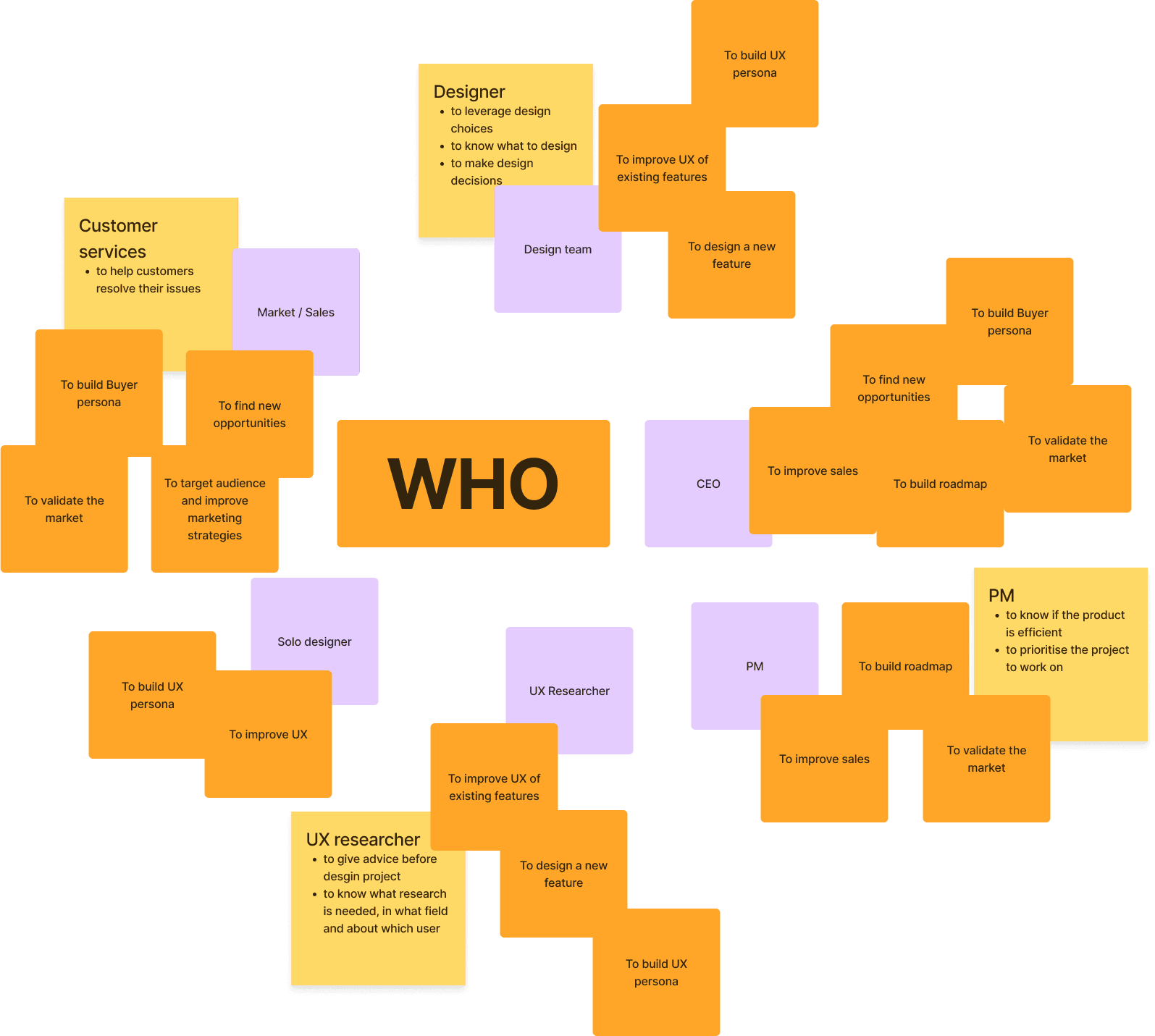
We ran qualitative interviews and a deep competitive review to understand target users’ pain points.
Three key profiles emerged:
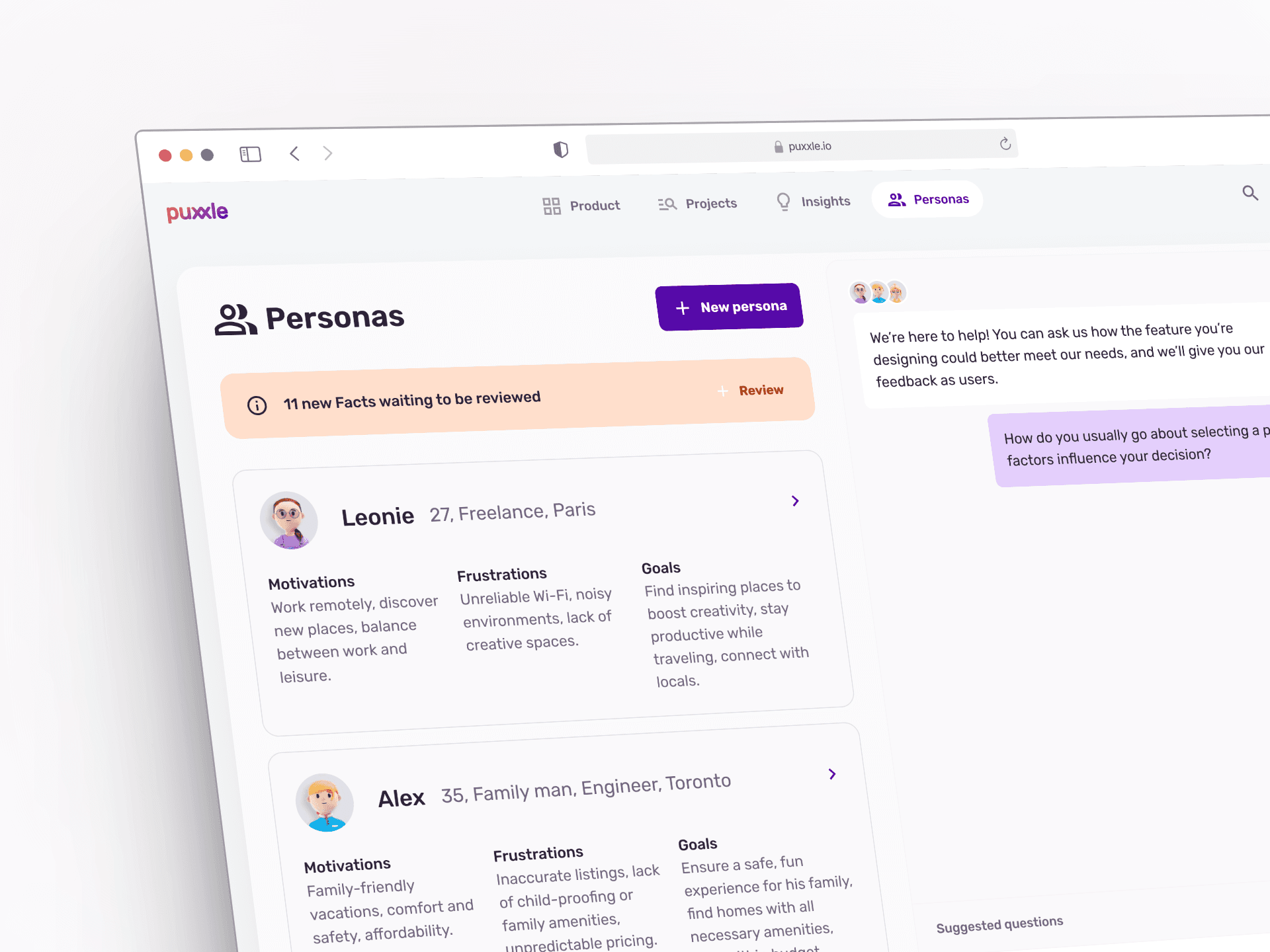
Alice, senior UX researcher, needs to centralise scattered data, analyse faster, and share clear insights with her team.
Thomas, UX/UI designer, wants quick access to reliable data to support decisions while juggling many responsibilities.
Emily, product manager, wants to prioritise the right features but struggles with unstructured user feedback.
These personas framed our thinking. They helped surface the real pain points: cognitive overload, lack of centralisation, and difficulty turning raw data into quality insights.
Research and problem framing
Alongside personas, we demoed the in-progress tool and tested early mockups.
Feedback refined our hypotheses and surfaced recurring patterns:
- Fragmented research process — data spread across Notion, Figma, Google Drive, or tools poorly suited to analysis.
- Constrained access — insights were slow to reach and required heavy manual work.
- Limited time and resources — designers and PMs want actionable output but little time to analyse or cross-reference data.
Ideation and exploration
To address these issues, we imagined a smooth journey from project creation through insight generation and validation.
Benchmarking existing tools
We analysed solutions like Notion, Dovetail, and Miro for strengths (sharing, accessibility) and limits (little automation, data disconnected from insights, fragmented tools).
Defining the user journey
A clear path from project creation to insight use:
- Define a project and its goals
- Add data (notes, files, recordings)
- Automatically generate a research plan
- Analyse data and produce insights
- Validate and publish results
- Link insights to existing personas
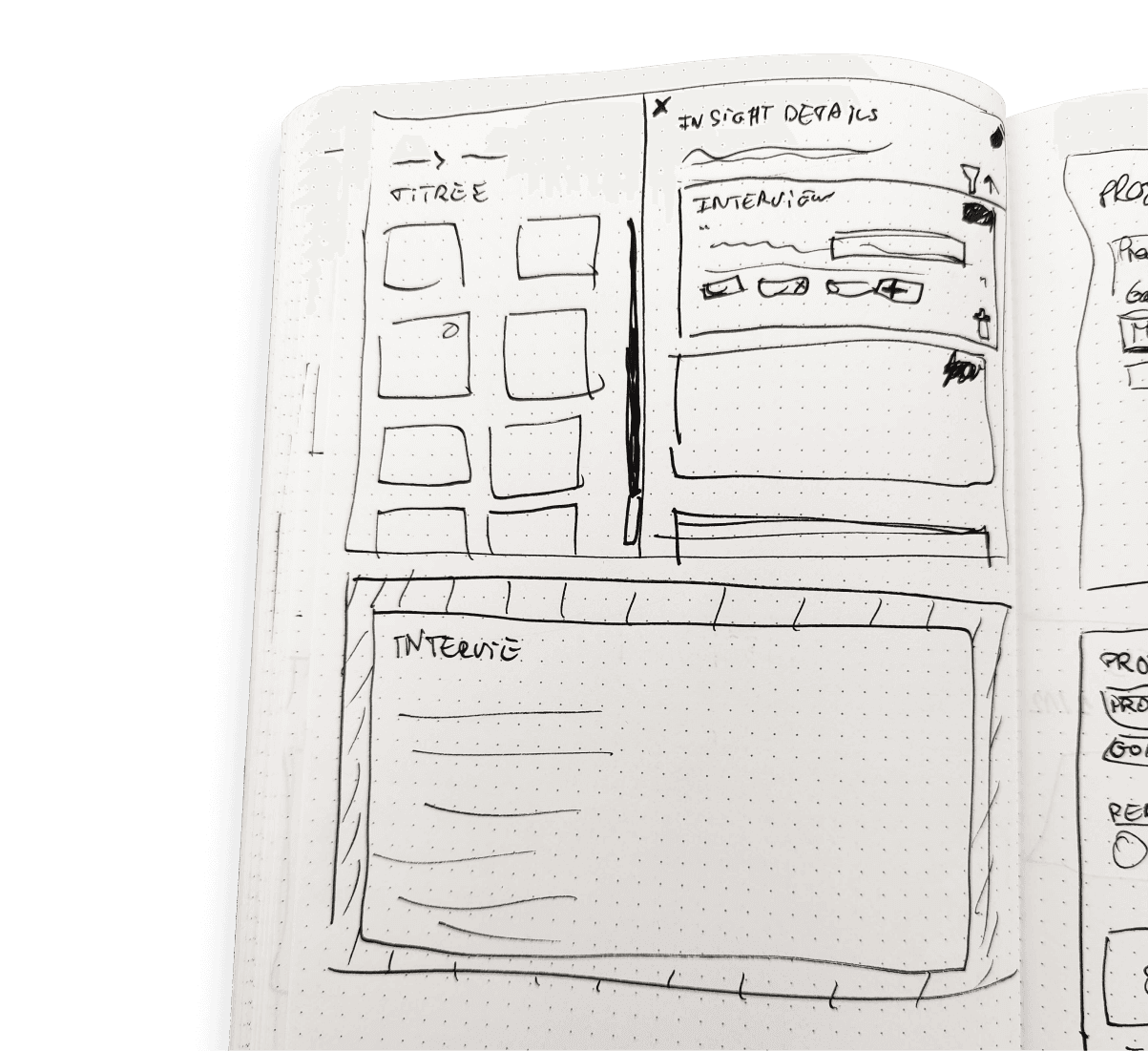
Wireframes and testing
We produced wireframes to prototype ideas quickly.
Some features (e.g. user recruitment) were deferred for the MVP to focus on the most critical phase: data analysis.
Benchmark
- Notion: very flexible for documentation, but weak for structured analysis (lots of manual work).
- Dovetail: powerful for tagging/structuring, less fluid for centralising an entire product project.
- Miro: great for exploration and collaboration, hard to turn into actionable insights without extra work.
Solution
From these learnings we designed an MVP around four key actions addressing the most urgent needs. Each module was built around a specific action to improve researchers’ and designers’ experience and efficiency.
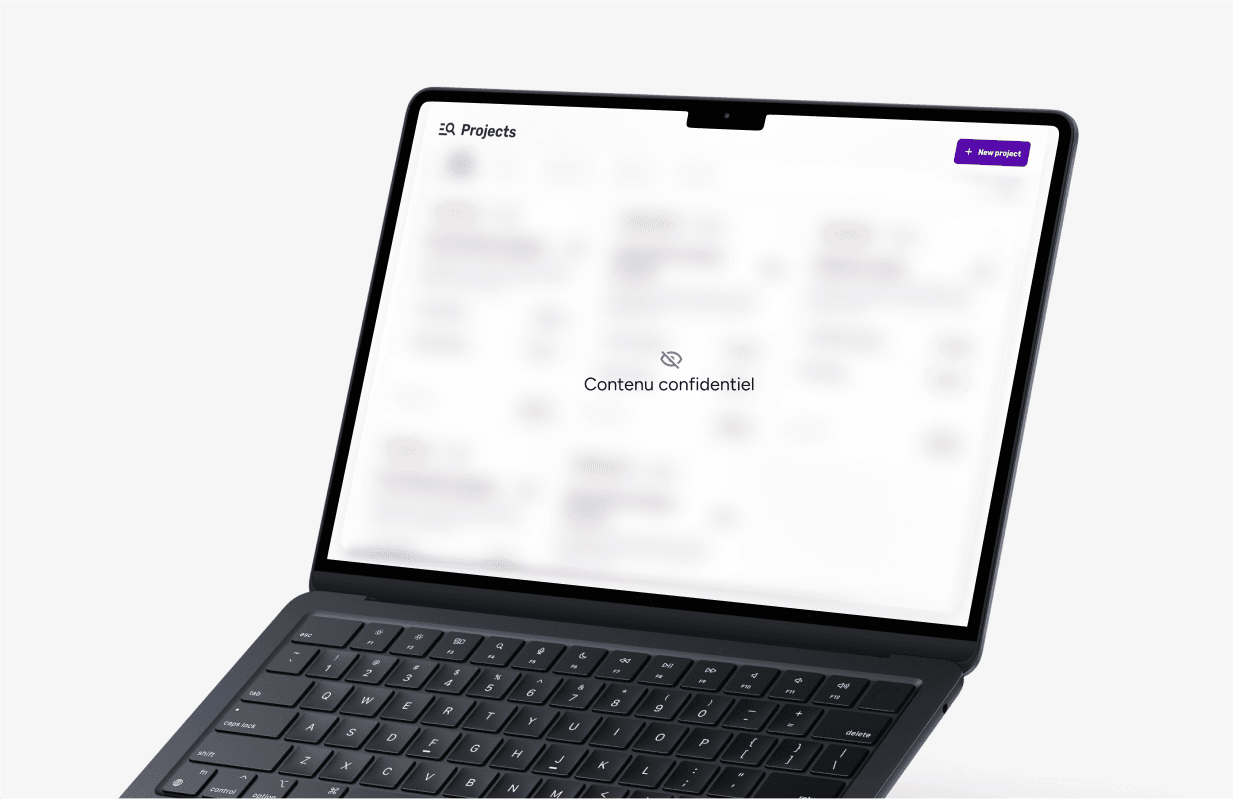
Organise projects easily
Table view of all projects with filters (status, user, date) and visual progress indicators.
Helps users find past and active research quickly.
Run UX research
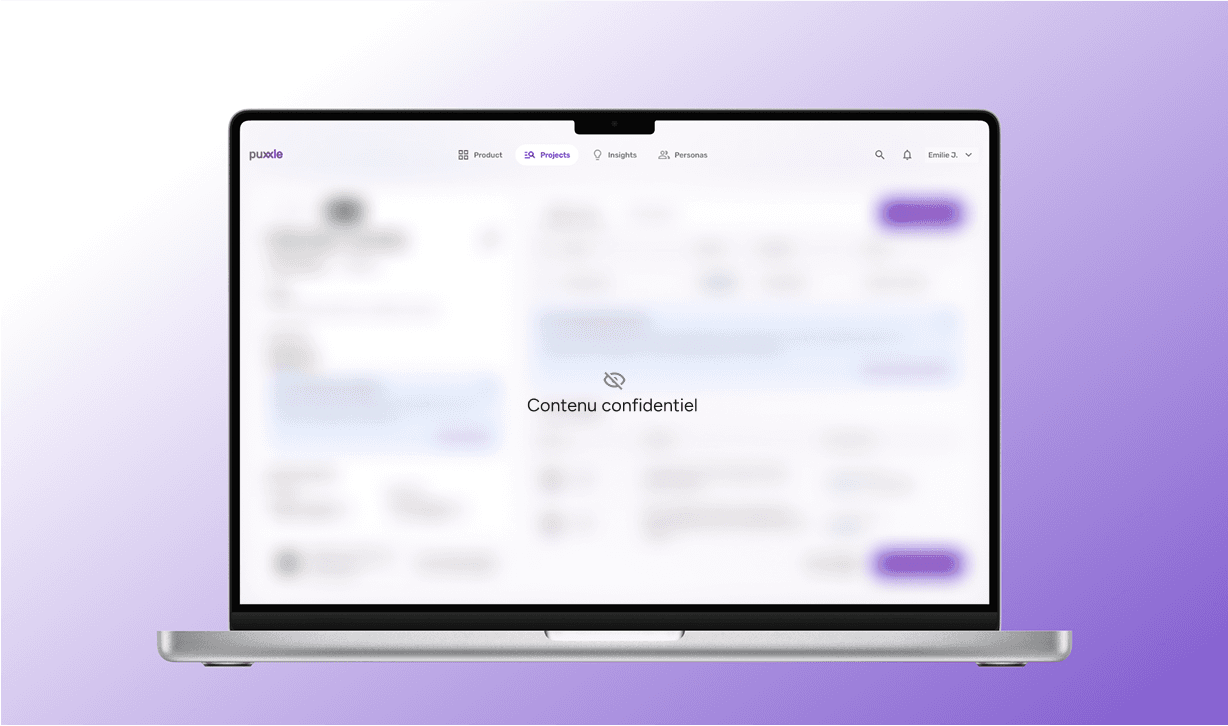
Per-project dashboard combining research plan, methods used, generated insights, and a side panel with linked personas, key resources, and team comments.
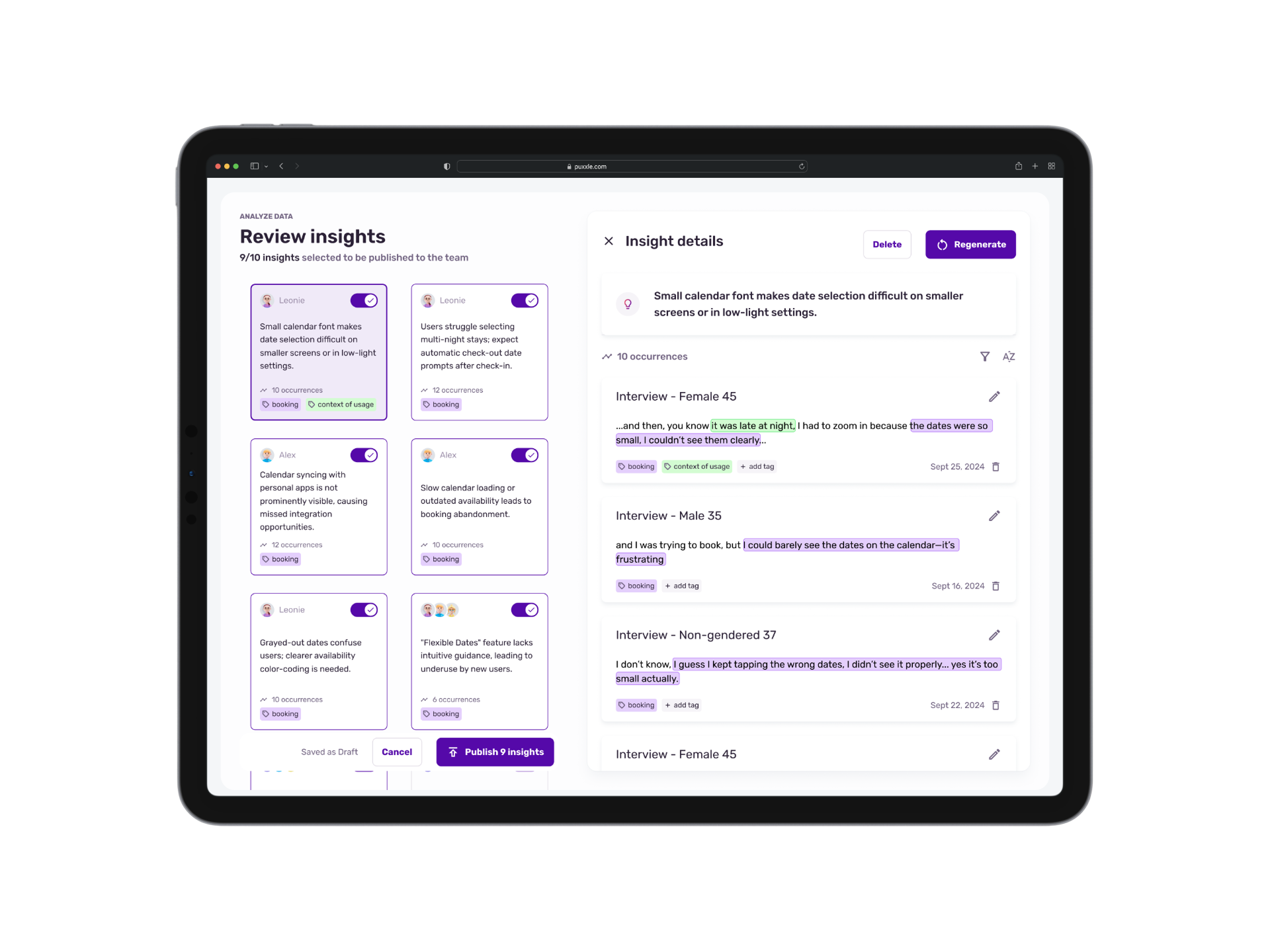
Analyse and validate insights efficiently
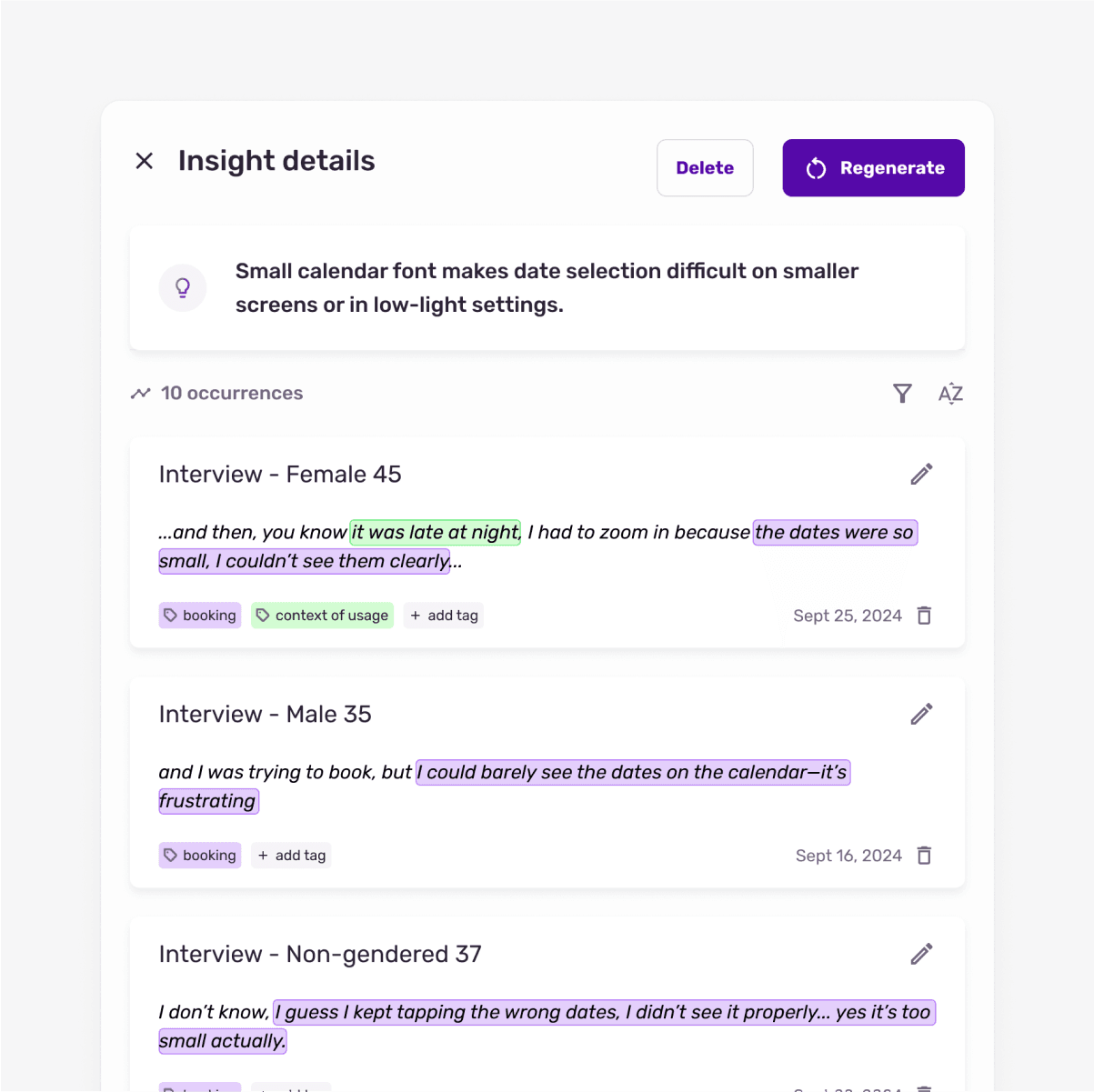
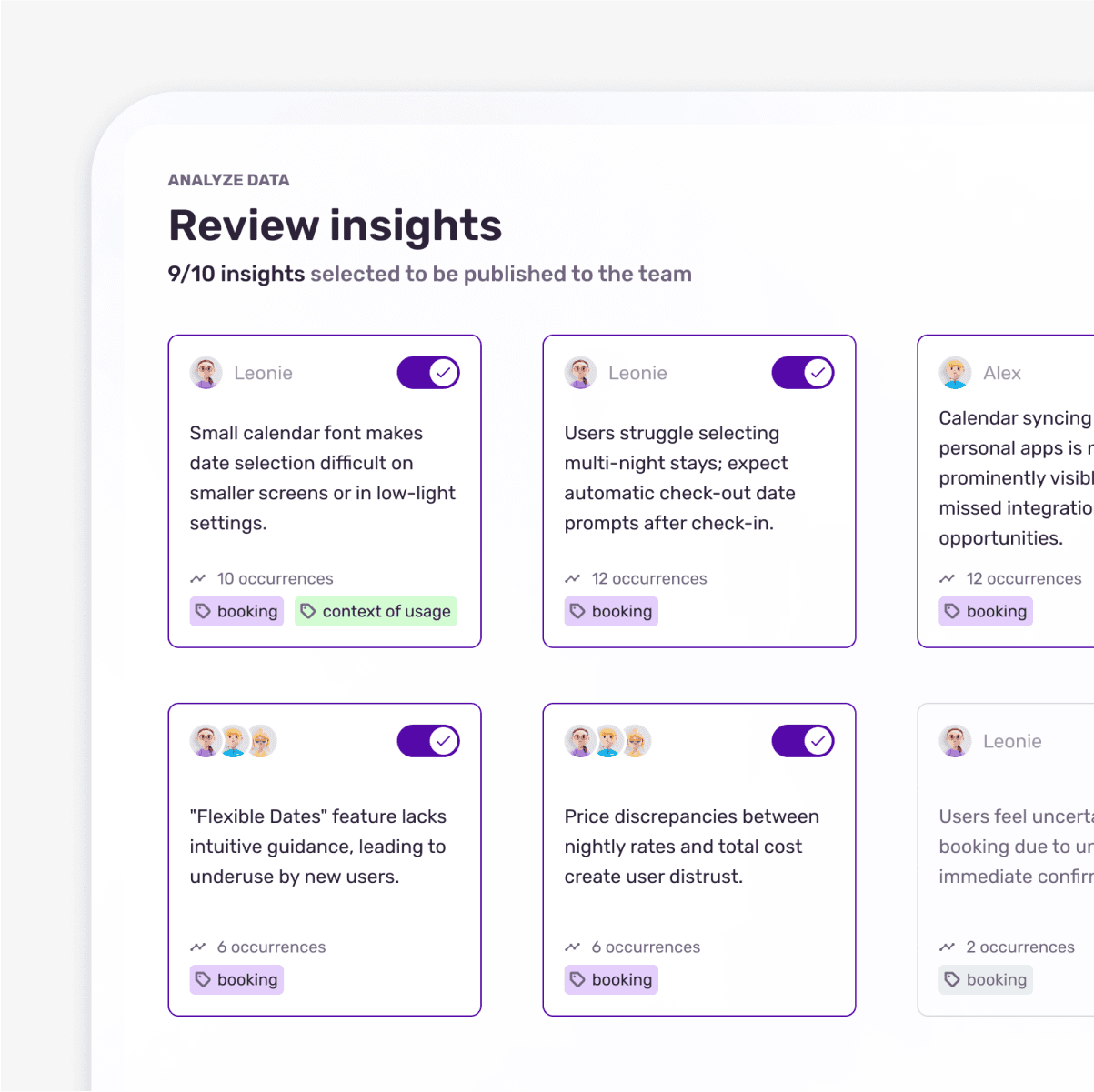
Each insight is generated automatically from verbatims and entered data.
Users can edit, validate, classify by theme or priority, and trace origin (source, file, user).
Query personas and validate hypotheses
Interactive persona library fed by past projects.
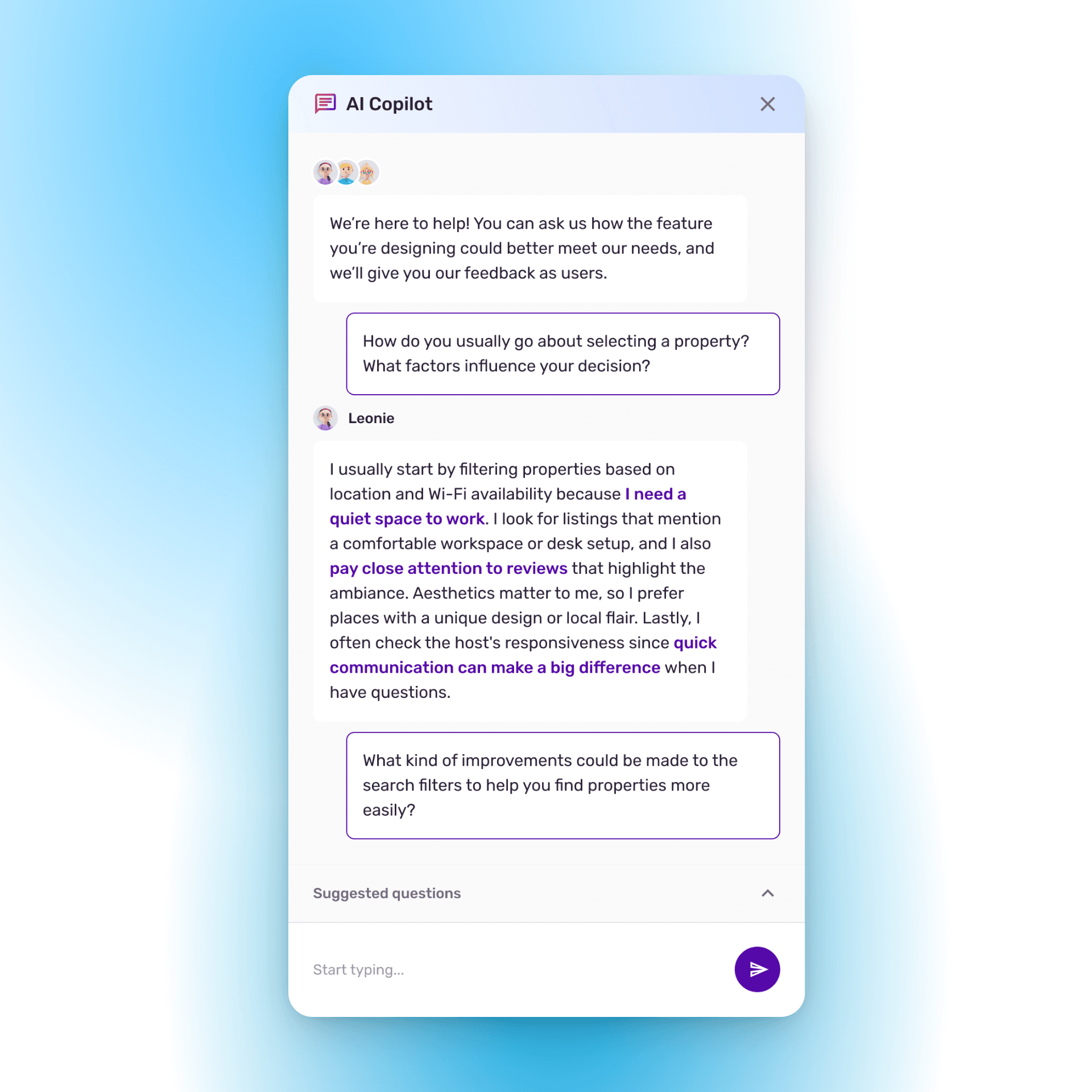
Each card shows frustrations, needs, quotes, and key data. An AI chat lets users interact with personas to retrieve insights quickly or check hypotheses.
After one iteration we broadened this with an AI Copilot available across the product, so users could ask questions anytime, not only in a persona tab.
That made AI assistance more contextual, fluid, and available throughout the research workflow.
Results and next steps
The MVP is ready to launch in summer 2025. It already convinced a first beta tester who integrated it into their design process and provides regular feedback.
This project strengthened several key skills:
I also refined my ability to prototype quickly, test concepts continuously, and fold user feedback into short iteration cycles.
Summary
- Product architecture structuring
- Feature prioritisation within an MVP scope
- Cross-functional collaboration with product and engineering
- Deep exploration of generative AI in UX workflows